
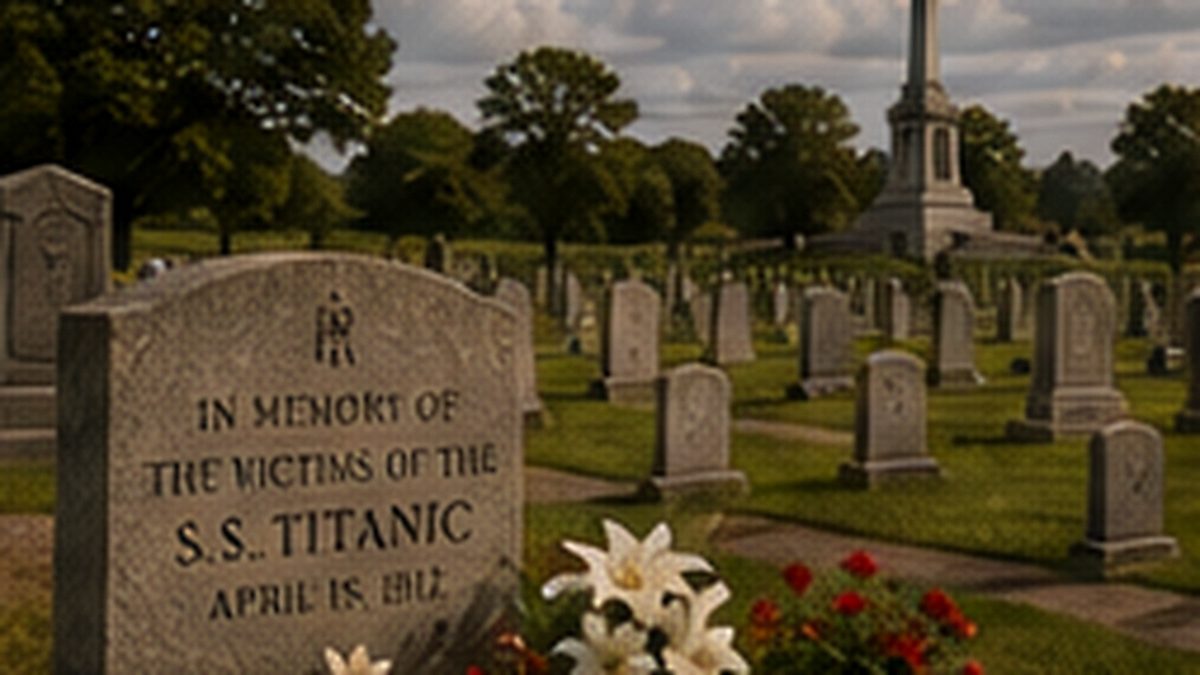
The Halifax cemetery record
- Fairview Lawn is the largest Titanic burial site, with 121 graves and monuments.
- Mount Olivet received Catholic victims, while Baron de Hirsch received Jewish victims and some people believed to be Jewish from the records then available.
- Some victims are named; others remain identified only by a recovery number.
- The cemeteries are memorial and burial places, not proof that every Titanic victim was recovered.
The three Titanic cemeteries in Halifax
The 150 Halifax burials are divided among three cemeteries.
| Cemetery | Titanic burials | Historical role |
|---|---|---|
| Fairview Lawn Cemetery | 121 | Non-denominational cemetery and the largest Titanic grave site in Halifax. |
| Mount Olivet Cemetery | 19 | Catholic cemetery used for identified and unidentified Catholic victims. |
| Baron de Hirsch Cemetery | 10 | Jewish cemetery used for Jewish victims and people classified as Jewish in 1912 records. |
| Total | 150 | Victims brought to Halifax and not forwarded elsewhere. |
Cemetery counts describe burials and monuments, not the complete death toll. Most Titanic victims were never recovered.
Why Halifax became the centre of the recovery operation
Halifax was a major North Atlantic port with cable ships, naval facilities, undertakers, transportation links, and experience supporting maritime operations. The organized effort used Mackay-Bennett, Minia, and Montmagny from Halifax, followed by Algerine from St. John’s, Newfoundland.
The four dedicated ships recovered 328 victims. Two hundred and nine were brought to Halifax. Relatives claimed 59 for transportation elsewhere, leaving 150 to be buried locally.
Fairview Lawn Cemetery: 121 Titanic graves
Fairview Lawn contains the largest group of Titanic graves anywhere in the world. The monuments include identified passengers and crew as well as people whose names remain unknown. Many stones display the recovery number used in the official body and effects records.
The best-known grave is Body No. 4, the Unknown Child, identified in later research as Sidney Leslie Goodwin. Other notable burials include musician John “Jock” Hume, restaurant manager Luigi Gatti, Alma Pålsson, and numerous crew members and third-class passengers.
Mount Olivet Cemetery: 19 Catholic burials
Mount Olivet received 19 Titanic victims under Catholic burial arrangements. The group includes identified and unidentified victims whose records or personal effects indicated Catholic affiliation.
Titanic musician John Frederick Preston Clarke is buried at Mount Olivet. His grave connects the cemetery with the wider story of Titanic’s eight musicians, while unidentified monuments show the limits of the 1912 identification process.
Baron de Hirsch Cemetery: 10 Jewish burials
Ten Titanic victims were buried at Baron de Hirsch Cemetery. The group includes identified Jewish victims, unidentified people assigned there because effects or contemporary assumptions suggested Jewish identity, and Michel Navratil Sr.
Navratil had travelled under the surname Hoffman. Because that name was understood as Jewish during the recovery process, he was buried at Baron de Hirsch even though he was Catholic. The case shows how burial decisions sometimes depended on incomplete information available in 1912.
Why some graves have only a body number
Recovery crews numbered victims so descriptions and personal effects would remain connected to the correct record. When no name could be established, that number became the most reliable identifier and was placed on the grave.
A numbered headstone does not mean that no effort was made. The archival files record clothing, jewelry, documents, keys, tattoos, occupations, and possible passenger or crew classifications. Some identities were corrected later, but others remain unresolved.
Why other recovered victims are not buried in Halifax
Fifty-nine of the victims brought to Halifax were claimed and transported elsewhere. John Jacob Astor IV and Isidor Straus were returned to New York, Charles Melville Hays was taken to Montreal, Francis Davis Millet was sent toward Boston, and Wallace Hartley was returned to England.
Other recovered victims were buried at sea before the recovery ships reached Halifax. A Halifax grave directory therefore represents one important part of the recovery story, not every person found after the sinking.
Visiting the graves respectfully
The cemeteries are active places of burial and remembrance. Visitors should follow posted hours and rules, remain on established paths, avoid touching or leaning on monuments, and give funeral services and families privacy.
The most useful preparation is to read the recovery records and biographies before visiting. A name or body number on a headstone becomes more meaningful when connected with the person’s class, occupation, family, intended destination, and identification record.
Halifax graves and the wreck as connected memorials
The Halifax cemeteries and the North Atlantic wreck site preserve different parts of the same loss. The graves give names and burial places to 150 recovered victims. The wreck and debris field remain the final resting place associated with many others who were never recovered.
Modern protection agreements treat the wreck with memorial respect, while the cemeteries remain active public places. Reading the two together keeps the story centred on people rather than reducing either location to an attraction.
Sources for Titanic graves in Halifax
The cemetery totals and burial history come from Nova Scotia museum, archive, and municipal records.
- Maritime Museum of the Atlantic: RMS Titanic Cemetery totals of 121 at Fairview Lawn, 19 at Mount Olivet, and 10 at Baron de Hirsch.
- Maritime Museum: Titanic and the Halifax connection The 150 Halifax burials and the disposition of victims brought to port.
- Nova Scotia Archives: Halifax burial records Individual recovery numbers, names, dispositions, and cemetery assignments.
- Halifax Regional Municipality: Fairview Cemetery context Municipal information for Fairview and cemetery visitation.
- Maritime Museum: Titanic Shoes of the Unknown Child Sidney Goodwin’s recovery, burial, and later identification.