
Joined people records
The passenger and crew system combines every survivor and victim record, with one doubtful passenger clearly marked.
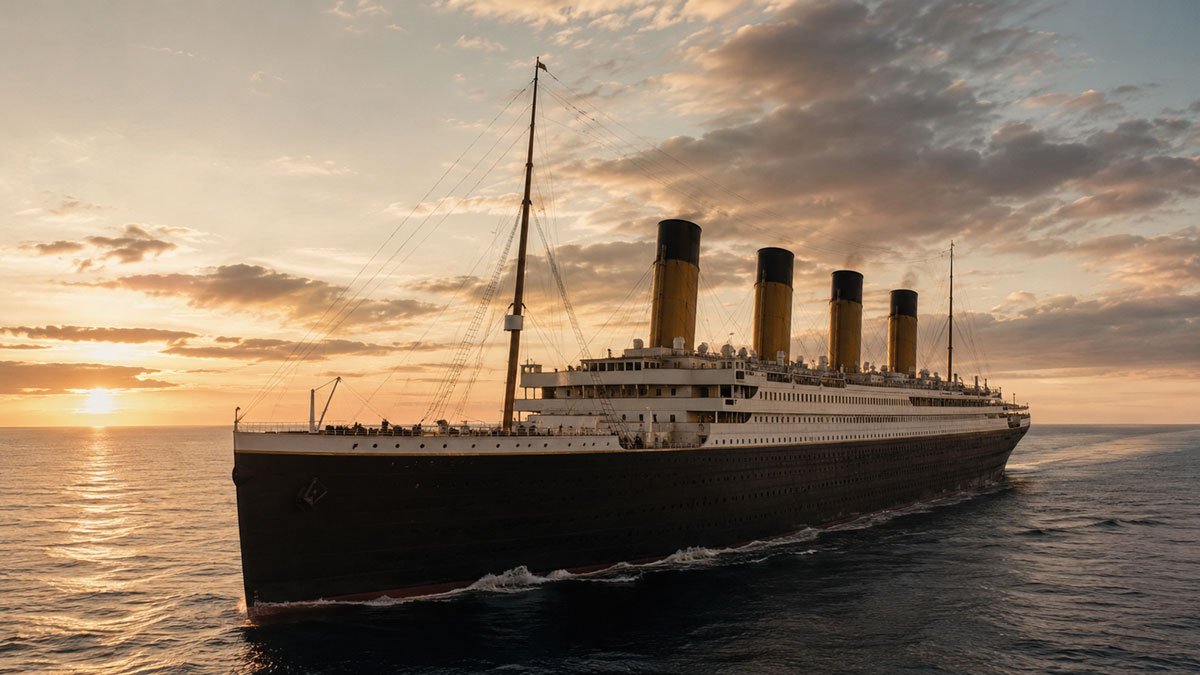
Titanic survivors and the human story of the disaster
Search complete modern passenger and crew manifests alongside rolls of 712 survivors and 1,496 victims, then explore more than 120 researched survivor biographies, victim stories, lifeboat accounts, rescue history and life after 1912.
Explore Titanic survivors
The complete historical rolls and the site’s in-depth biographies are different resources. These figures make that distinction clear.
The passenger and crew system combines every survivor and victim record, with one doubtful passenger clearly marked.
Search every name in the modern research roll and filter by class, crew, gender, age group or embarkation port.
Search the site’s chosen modern casualty dataset by passenger class, crew department and other recorded details.
These complete individual pages add testimony, lifeboat evidence, family context and later-life history.
The boats had rated space for 1,178 people, far fewer than the number aboard.
The ship sank on April 15, 1912, about two hours and forty minutes after the collision.
Passenger and crew records
The people-aboard hub explains why published Titanic totals differ and separates the final-aboard population from people who travelled on an earlier segment of the maiden voyage.
The passenger and crew manifests combine survivors and victims, while keeping the existing outcome-specific lists intact.
The complete directory contains all 712 survivor names. The links below open a selection of the 123 records with full biographies.
Survival was shaped by location, timing, class, crew duties, lifeboat loading, family decisions, and luck. These lists make those differences easier to see.
Read passenger, family, servant, and lifeboat stories from the upper decks.
20 biographiesExplore the middle-deck families, children, teachers, travelers, and witnesses who lived.
13 biographiesFollow immigrants and families who faced longer routes and the most difficult survival odds.
26 biographiesMeet officers, wireless operators, stewards, sailors, stokers, and other workers who survived.
The survivor story begins with warnings and a collision, but it becomes most human during the evacuation. Some passengers reached the boat deck early. Others struggled through unfamiliar corridors or waited for clearer instructions. Crew members faced another set of choices because many were still working, sending distress calls, preparing boats, keeping lights on, or trying to maintain order.
Reaching a lifeboat did not end the danger. Boats were lowered unevenly, some left with empty seats, and several came close to being swamped or crushed. Survivors then waited in the cold and darkness until Carpathia arrived. The rescue brought safety, but it also brought separation, uncertainty, and the first realization of how many people had been lost.
Explore the complete Titanic lifeboat list and launch order, or read why the ship did not carry enough places for everyone.
The British inquiry counted 711 survivors: 499 passengers and 212 crew members. A modern specialist compilation lists 712. Other summaries use nearby rounded totals because passenger and crew lists do not always follow the same classification rules.
The complete names directory contains 712 survivors. Within that roll, 123 verified records link to full individual biographies. Keeping those counts separate prevents the biography collection from being mistaken for the complete historical list.
Read how Titanic sources and conflicting records are handled.
Carpathia carried the survivors to New York, but their stories continued in very different ways. Some gave testimony almost immediately. Some became public speakers or authors. Others avoided the subject for decades. Child survivors grew up with memories shaped by family loss, newspaper interest, and repeated questions about a night they had experienced at a very young age.
Later-life stories matter because they show that survival was not a simple happy ending. The disaster affected families, careers, health, identity, and public reputation. Reading beyond the lifeboat is often the best way to understand what being a Titanic survivor actually meant.
These biographies include famous public figures, children, officers, crew members, and people whose experiences reveal a less familiar side of the disaster.
Learn how Margaret “Molly” Brown survived Titanic in Lifeboat 6, organized relief aboard Carpathia, and became an “Unsinkable” legend.
Survivor biographyLearn how J. Bruce Ismay survived Titanic in Collapsible C, what the inquiries found about speed and blame, and why he became the disaster’s public villain.
Survivor biographyLearn how Charles Lightoller survived Titanic, why he applied women and children first strictly, what he told the inquiries, and how he later helped at Dunkirk.
Survivor biographyLearn how Violet Jessop survived Titanic and Britannic, what happened aboard Olympic, which lifeboat saved her, and the truth behind “Miss Unsinkable.”
Survivor biographyLearn how infant Millvina Dean survived Titanic, what happened to her family, why she had no memory of the sinking, and when the last Titanic survivor died.
Survivor biographyLearn how pregnant 18-year-old Madeleine Astor survived Titanic in Lifeboat 4, lost John Jacob Astor and rebuilt her life after 1912.
Survivor biographyLearn how Harold Bride helped send Titanic’s CQD and SOS calls, survived beneath Collapsible B, worked aboard Carpathia, and testified at the inquiries.
Survivor biographyLearn how seven-year-old Eva Hart survived Titanic in Lifeboat 14, lost her father, remembered the ship breaking apart, and spoke against wreck salvage.
Survivor biographyLearn how Lawrence Beesley survived Titanic in Lifeboat 13, escaped Boat 15 descending above him, and wrote a major eyewitness book in 1912.
Survivor biographyLearn how Dorothy Gibson survived Titanic in Lifeboat 7 and starred in Saved from the Titanic, the first dramatic film about the disaster, released in 1912.
Survivor biographyLearn how Archibald Gracie survived on overturned Collapsible B, testified at the U.S. inquiry and created a major early Titanic eyewitness history.
Survivor biographyLearn how Fifth Officer Harold Lowe commanded Lifeboat 14, transferred passengers, returned toward the wreckage and testified at both Titanic inquiries.
Survivor biographyLearn how lookout Frederick Fleet spotted Titanic’s iceberg, rang three bells, called the bridge, testified about binoculars and survived in Lifeboat 6.
Survivor biographyLearn how 17-year-old Jack Thayer survived on overturned Collapsible B, lost his father and later recorded Titanic bending and breaking apart.
Survivor biographyLearn how fashion designer Lucy Duff-Gordon survived Titanic in Lifeboat 1, faced the £5 controversy and challenged invented newspaper quotations.
Survivor biographyLearn what Robert Hichens did at Titanic’s wheel, why he commanded Lifeboat 6 and how inquiry testimony differs from the Molly Brown legend.
Survivor biographyLearn how R. Norris Williams survived Titanic on waterlogged Collapsible A, lost his father and became a U.S. tennis champion and Olympic gold medalist.
Survivor biographyLearn how Fourth Officer Joseph Boxhall inspected Titanic, calculated its distress position, fired rockets, survived in Lifeboat 2 and testified in 1912.
Survivor biographyRead Masabumi Hosono’s Titanic account, his probable Lifeboat 10 escape and the evidence behind later claims that Japan shamed him for surviving.
Survivor biographyLearn how the Countess of Rothes survived Titanic, took the tiller of Lifeboat 8, helped other passengers and formed a lifelong friendship with Thomas Jones.
Survivor biographyLearn how Sir Cosmo Duff-Gordon survived in Emergency Lifeboat 1, why he paid crewmen £5 and what the British Titanic inquiry actually concluded.
Survivor biographyLearn how Titanic fireman Arthur John Priest survived and how later escapes from Alcantara, Britannic and Donegal shaped the Unsinkable Stoker legend.
Survivor biographyLearn how Lillian Asplund survived with her mother and brother, lost four family members and became Titanic’s final survivor with personal memories.
Survivor biographyLearn how teenage Edith Brown survived, why Lifeboat 14 is the strongest assignment and how she became a centenarian and late public witness.
Survivor biographyLearn how Frank Goldsmith survived in Collapsible C, lost his father, rebuilt life in Detroit and wrote a rare extended third-class survivor account.
Survivor biographyLearn how three-year-old Michel Navratil survived in Collapsible D, was reunited with his mother, became a philosophy professor and the last male survivor.
Survivor biographyLearn how infant Barbara West survived with her mother and sister, lost her father, became a teacher and chose privacy as one of Titanic’s final survivors.
Survivor biographyLearn how third-class passenger Rhoda Abbott stayed with her teenage sons, survived in flooded Collapsible A and lived with severe loss after Titanic.
Survivor biographyLearn how fashion journalist Edith Rosenbaum, later Edith Russell, survived in Lifeboat 11 with a musical toy pig and became a prominent Titanic witness.
Survivor biographyRead about Fang Lang, or Wing Sun Fong, one of Titanic’s six Chinese survivors, his third-class voyage, disputed Lifeboat 14 rescue identification and later life in America.
Survivor biographyLearn about Ruth Becker, her family journey from India, separation during the evacuation, Lifeboat 13, and later interviews.
Survivor biographyLearn how Titanic chief baker Charles Joughin survived, what he testified about Lifeboat 10 and Collapsible B, and why alcohol did not save him.
These records and specialist databases provide the main starting points for survivor totals, class patterns, testimony, and individual biographies.